Have you ever found yourself going quiet when you needed support the most?
When we’re feeling low, sad, or overwhelmed, one of the hardest things to do is reach out. We stop replying to messages. We avoid calls. We isolate. Ironically, this is when we most need connection.
That’s why we’re sharing something simple but potentially life-changing: the 8 Minute Rule.
What is the 8 Minute Rule?
It’s a code. A signal. A lifeline.
If you’re struggling with your mental health—whether you’re feeling anxious, numb, down, or just not yourself—send a message to a friend or loved one that says:
“Got 8 minutes?”
That’s it. No pressure. No need to explain. It’s a way of saying, “I need you.”
And on the flip side, if someone sends that message to you, you don’t have to fix anything or give advice. Just listen. Be there. Give them your 8 minutes.
Why We Go Quiet
We often go silent during hard times for reasons that make sense in the moment:
We don’t want to be a burden
We feel ashamed or embarrassed
We believe others are too busy
We can’t find the words
The 8 Minute Rule removes those barriers. It gives people a tool—an easy way in.
What 8 Minutes Can Do
It may not sound like much, but research and experience show that even short bursts of human connection can:
Regulate emotions
Reduce anxiety
Boost feelings of belonging
Interrupt negative thought spirals
Remind us we’re not alone
Just hearing a friendly voice, or getting a message that says “I’m here,” can be enough to shift someone’s state.
How to Use It
If you’re struggling – Send “Got 8 minutes?” to someone you trust. It can be a text, WhatsApp, DM—whatever’s easiest. You don’t have to say more.
If you receive the message – Reply. Call. Be there. You don’t need to have the perfect words—just give your time and presence.
If you’re checking in on others – Let your people know about the rule in advance. Say, “If you ever need me, just send me ‘8 minutes’—no questions asked.”
Mental Health Needs Connection
This Mental Health Awareness Week, let’s break the silence together. Let’s make it easier for people to reach out. Let’s build a culture where it’s okay to not be okay—and where 8 minutes could change a life.
Share the 8 Minute Rule with your friends and networks. Let’s make it a thing. For you. For them. For all of us.
Join the Conversation:
Have you ever needed support but didn’t know how to ask?
What helps you feel connected when you’re low?
Drop your thoughts below or share this post with someone who needs to hear it.
As a leader, one of the most effective ways to inspire growth, engagement, and performance in your team is through coaching. The approach you take as a coach can dramatically influence the success and development of individuals in your team. Coaching is not just about giving advice or solving problems; it’s about fostering a mindset of growth, encouraging accountability, and empowering people to discover their own solutions.
Why Coaching Matters for Leaders
In today’s dynamic work environment, employees are looking for leaders who can guide them, not just supervise them. Coaching helps create a space where team members feel valued, understood, and supported in their personal and professional development. It is a process that focuses on helping individuals recognize their strengths and weaknesses, set meaningful goals, and develop the confidence to overcome obstacles.
Effective coaching, therefore, requires leaders to adopt different styles depending on the needs of the team and individual members. Here, we explore some of the most common coaching styles and how leaders can use them to bring out the best in their teams.
1. The Directive Coaching Style:
This style is best suited for situations where quick decisions are needed or when employees are new to a role or task. A leader using the directive coaching style provides clear, specific instructions and guidance to ensure tasks are completed efficiently.
Characteristics:
Clear instructions and expectations
Close monitoring of performance
Quick decision-making and action
When to Use:
When the team member is inexperienced or unfamiliar with the task
In high-pressure situations requiring quick resolutions
For routine or task-oriented work where little innovation is needed
Pros:
Provides clarity and structure
Helps in the development of basic skills and competencies
Can boost confidence in new team members by providing them with clear direction
Challenges:
Can be seen as overly controlling or micromanaging if used too frequently
May not foster independence in team members over time
2. The Supportive Coaching Style:
In this style, the leader focuses on building trust, offering encouragement, and providing emotional support. Rather than giving specific instructions, a supportive coach listens actively, helps the individual explore options, and encourages them to overcome challenges on their own.
Characteristics:
Active listening and empathy
Encouragement and positive reinforcement
Helping the individual to think through challenges
When to Use:
When team members are facing emotional or mental barriers
To build confidence and morale, especially after setbacks
In situations where individuals are seeking personal development or overcoming challenges
Pros:
Builds trust and strong relationships between leaders and team members
Increases engagement and morale, especially in difficult situations
Empowers individuals to find their own solutions
Challenges:
Can be time-consuming, as it requires more one-on-one interaction
May not always provide the necessary structure when fast action is needed
3. The Transformational Coaching Style:
Transformational coaching is focused on inspiring individuals to think beyond their current limitations and pursue personal and professional growth. Leaders using this style work to align team members with a vision, motivating them to take ownership of their development and exceed their own expectations.
Characteristics:
Focus on inspiring and motivating team members
Encouraging creativity and innovation
Providing guidance on long-term career and personal development
When to Use:
When you want to inspire individuals to reach their full potential
In situations requiring creativity, innovation, or new ideas
For leaders who are guiding employees through major transitions or periods of change
Pros:
Encourages self-reflection and long-term development
Fosters creativity and innovation
Strengthens commitment to organizational goals and values
Challenges:
Requires significant time and energy investment from the leader
Can be overwhelming for individuals who are not ready for change or self-reflection
4. The Participative Coaching Style:
In participative coaching, the leader takes a collaborative approach, involving team members in decision-making processes. This style is about empowering individuals to contribute their ideas and solutions, creating a sense of ownership and responsibility for both their work and the team’s success.
Characteristics:
Collaborative decision-making and problem-solving
Encouraging open communication and feedback
Fostering a sense of ownership in team members
When to Use:
When you want to foster a sense of ownership and accountability in your team
In creative and knowledge-based environments where input from all team members is valuable
When promoting team collaboration and cohesion is important
Pros:
Promotes engagement, ownership, and commitment from team members
Encourages a diversity of ideas and perspectives
Strengthens team collaboration and communication
Challenges:
Can be time-consuming if decisions require input from everyone
Potential for conflict if team members disagree strongly on the direction to take
5. The Coaching Style of Delegation:
Delegation is one of the most important coaching styles, particularly for experienced or high-performing team members. This coaching style involves giving employees the autonomy to make decisions, while still providing support and guidance when necessary.
Characteristics:
Empowerment and trust in the individual’s abilities
Providing minimal direction but making resources and support available
Holding the individual accountable for their performance
When to Use:
For experienced and competent team members who can handle responsibility
When you want to develop leadership skills in your team
When a team member is ready for more autonomy and growth
Pros:
Increases the team’s confidence and sense of responsibility
Encourages initiative and problem-solving skills
Frees up the leader to focus on other strategic priorities
Challenges:
Can result in mistakes if the team member is not fully ready for the responsibility
Requires careful monitoring to ensure that support is available when needed
Conclusion: Tailoring Your Coaching Style to Your Team’s Needs
As a leader, understanding and adapting your coaching style to suit the needs of your team is key to achieving success. Each individual responds differently to various approaches, and by flexing your style, you can help them grow, stay engaged, and perform at their best.
Great leaders are those who take the time to understand their team, listen actively, and provide the right level of support. Whether you’re offering guidance through a directive style, fostering confidence through a supportive approach, or inspiring transformation, coaching is a powerful tool for unlocking potential and driving performance.
At Exemplar Pro, we specialize in delivering coaching services that are tailored to the needs of leaders. Our coaching programs help you identify the best coaching styles to adopt in different situations, enabling you to foster growth, build stronger teams, and drive lasting success. By refining your coaching techniques with Exemplar Pro, you’ll not only enhance your leadership skills but also unlock the full potential of your team.
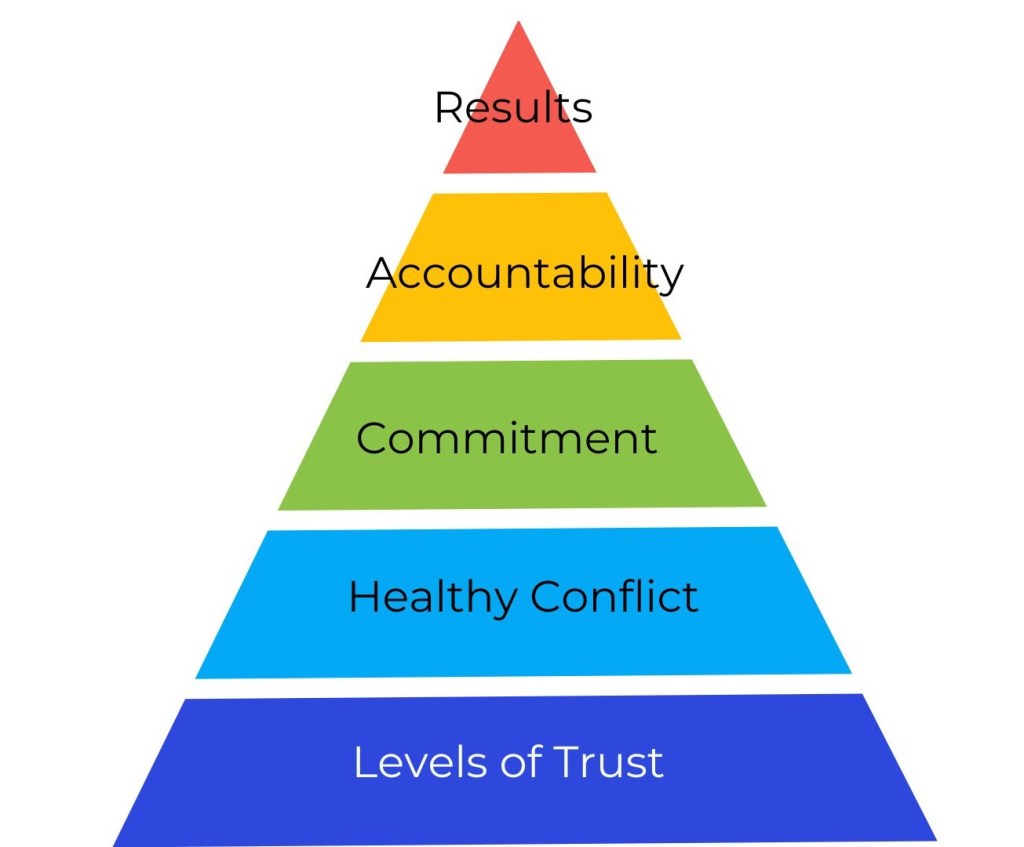
In today’s fast-paced business world, teamwork is more than just collaboration—it’s the foundation of success. Yet, many teams struggle with dysfunctions that hinder performance and productivity. Patrick Lencioni, in his book The Five Dysfunctions of a Team, outlines a framework that helps teams overcome these challenges and unlock their full potential. At Exemplar Pro, we use Wiley’s Five Behaviours of a Team assessment to help teams enhance their effectiveness.
Let’s explore how these five behaviours—Trust, Conflict, Commitment, Accountability, and Results—shape team dynamics and drive performance.
1. Trust: The Foundation of Teamwork
Trust is the cornerstone of any successful team. Lencioni emphasises vulnerability-based trust, where team members feel safe to admit mistakes, ask for help, and share their concerns without fear of judgment. Without trust, teams remain guarded, which stifles collaboration and innovation.
How to Build Trust:
Encourage open conversations and share personal experiences.
Foster a culture where admitting mistakes is seen as a learning opportunity.
Use assessments like DiSC to understand behavioural preferences and improve team cohesion.
2. Conflict: Healthy Debate Fuels Growth
Many teams avoid conflict to maintain harmony, but this often leads to artificial consensus and unresolved tensions. Productive conflict—where team members challenge ideas constructively—leads to better decision-making and innovation.
How to Encourage Healthy Conflict:
Create an environment where differing opinions are welcomed.
Set ground rules for respectful debate.
Facilitate structured discussions to ensure all voices are heard.
3. Commitment: Gaining Buy-In Through Clarity
Once teams engage in healthy debate, they must align behind decisions. Lack of clarity and consensus leads to ambiguity and hesitation. Commitment isn’t about unanimous agreement but ensuring that every team member feels heard and supports the final decision.
How to Strengthen Commitment:
Clearly define goals and expected outcomes.
Encourage team members to voice concerns before finalising decisions.
Use clear action plans to reinforce accountability.
4. Accountability: Holding Each Other to High Standards
Teams often struggle with accountability when members fear causing tension. However, high-performing teams embrace peer-to-peer accountability, where individuals hold each other responsible for performance and behaviour.
How to Foster Accountability:
Establish clear performance expectations.
Encourage open and honest feedback.
Regularly review progress against goals and address gaps constructively.
5. Results: Driving Success Together
The ultimate measure of a great team is its results. When trust, conflict, commitment, and accountability are strong, teams focus on collective success rather than personal gain. Teams that prioritise results outperform those that get distracted by individual achievements or silos.
How to Maintain a Results-Oriented Team:
Align individual and team goals with organisational objectives.
Celebrate team successes and learn from failures.
Regularly track and measure key performance indicators (KPIs).
Bringing It All Together
Team dynamics are complex, but by intentionally cultivating trust, embracing healthy conflict, committing to decisions, holding each other accountable, and focusing on results, teams can achieve exceptional performance.
At Exemplar Pro, we help teams apply The Five Behaviours of a Team framework to unlock their full potential. If you’re ready to transform your team’s performance, get in touch with us today.
In today’s fast-paced and complex world, leaders are facing unprecedented challenges. The old playbook of leadership—focused on acquiring new skills and competencies—is no longer enough. To thrive, leaders need to evolve in how they think, not just what they know. This is where vertical development comes in.
What is Vertical Development?
Traditional leadership development has primarily focused on horizontal development, which is about adding new knowledge, skills, and competencies. While this is essential, it does not fundamentally change how a leader thinks or operates. Vertical development, on the other hand, is about growing in cognitive complexity, emotional intelligence, and perspective-taking—it is about transforming how leaders make sense of the world.
A simple analogy is the difference between a cup and its contents. Horizontal development is like pouring more water (knowledge) into the cup. Vertical development is about growing a bigger, more sophisticated cup—allowing leaders to hold greater complexity, navigate ambiguity, and make better decisions.
The Stages of Vertical Development
Vertical development is often mapped through distinct stages, influenced by adult development theories from researchers such as Robert Kegan and Bill Torbert. These stages represent different ways leaders interpret the world:
Dependent (Self-Centric Leadership) – Focused on personal success, external validation, and following rules.
Independent (Achievement-Oriented Leadership) – Goal-driven, strategic thinkers who take ownership and drive results.
Interdependent (Systemic Leadership) – Leaders who think holistically, embrace complexity, and empower others for collective success.
Most leadership development programs focus on moving individuals from the first to the second stage. However, the real game-changer is progressing towards interdependent leadership, where leaders operate with adaptability, self-awareness, and a systemic mindset.
Why Vertical Development Matters for Leaders
Modern organizations operate in a VUCA world (Volatile, Uncertain, Complex, and Ambiguous). The ability to manage uncertainty and drive transformation requires more than just skills—it requires an evolved mindset. Leaders who undergo vertical development:
See the bigger picture – They recognize patterns, interdependencies, and systemic issues beyond short-term goals.
Handle ambiguity with confidence – Instead of seeking certainty, they navigate uncertainty with curiosity and adaptability.
Lead with psychological safety – They create environments where diverse perspectives are valued, fostering innovation and trust.
Make better decisions – They can balance short-term wins with long-term impact, considering multiple perspectives before acting.
How Leaders Can Develop Vertically
Unlike horizontal development, which can be achieved through training programs and skill-building, vertical development requires deep inner work. Here’s how leaders can foster their vertical growth:
Increase Self-Awareness – Engage in reflection, coaching, and feedback to challenge personal assumptions and biases.
Seek Discomfort & Complexity – Growth happens outside of comfort zones. Taking on stretch assignments, engaging with diverse perspectives, and embracing paradoxes all promote vertical development.
Develop a Growth Mindset – Move beyond a fixed way of thinking and be open to unlearning old models in favor of new, more adaptive ways of leading.
Engage in Meaningful Dialogue – Surround yourself with individuals who challenge your thinking, and practice active listening to expand your perspective.
Leverage Coaching & Mentorship – Working with a coach or mentor who operates at a higher vertical level can accelerate development and shift your leadership mindset.
Final Thoughts
In an era of disruption and rapid change, leaders who evolve in how they think—not just what they know—will drive the future of successful organizations. Vertical development is not just about being a better leader; it is about transforming how leadership itself is understood and practiced.
The question is: Are you ready to grow your cup?
At Exemplar Pro, we specialise in leadership development that goes beyond skills and into mindset transformation. Contact us to explore how we can support your leadership growth journey.
Leadership is not just about skills and competencies—it’s about mindset, perspective, and adaptability. The most effective leaders continuously evolve, growing beyond their current ways of thinking and operating. This is where Adult Development Theory (ADT) becomes a game-changer. Understanding how adults grow psychologically and cognitively over time can help leaders become more self-aware, adaptive, and transformational in their approach
What is Adult Development Theory?
Adult Development Theory, pioneered by theorists such as Robert Kegan and William Torbert, suggests that adults progress through distinct stages of development, each marked by increasing complexity in how they make sense of the world. Unlike childhood development, which is largely automatic, adult development requires intentional effort, reflection, and experiences that challenge existing perspectives.
At its core, ADT helps us understand how individuals:
Make meaning of their experiences
Navigate complexity and ambiguity
Manage relationships and responsibilities
Lead with greater emotional intelligence and strategic foresight
Stages of Adult Development in Leadership
While various models exist, Kegan’s theory outlines several key stages that directly impact leadership effectiveness:
The Socialized Mind (Dependent Leadership) Leaders at this stage rely heavily on external validation and expectations. They conform to organizational norms and seek approval from authority figures. While they can be loyal and hardworking, they often struggle with independent thinking and handling uncertainty.
The Self-Authoring Mind (Independent Leadership) Leaders begin to develop their own guiding principles and values. They make decisions based on internal convictions rather than external expectations. This stage fosters critical thinking, strategic vision, and the ability to lead with authenticity and confidence.
The Self-Transforming Mind (Interdependent Leadership) At this level, leaders recognize the limitations of their own perspectives and actively seek diverse viewpoints. They embrace complexity, hold multiple truths, and are comfortable with paradoxes. These leaders are adaptive, innovative, and deeply focused on developing others.
Why This Matters for Leadership Growth
Many leaders remain stuck at the Socialized or early Self-Authoring stages, limiting their ability to handle complexity and drive transformational change. Understanding and applying ADT allows leaders to:
Enhance Decision-Making: Leaders at higher stages of development navigate ambiguity more effectively, making well-informed and balanced decisions.
Foster Psychological Safety: They create environments where diverse perspectives are welcomed, encouraging innovation and learning.
Lead Through Uncertainty: In a world of constant disruption, self-transforming leaders can pivot and adapt without becoming overwhelmed.
Develop Others: They prioritize coaching and mentoring, helping their teams progress in their own developmental journeys.
How Leaders Can Apply ADT to Their Growth
Leaders don’t automatically advance through these stages—it requires deliberate effort and reflection. Here’s how to start:
Increase Self-Awareness: Regularly reflect on your thought processes, biases, and decision-making patterns.
Seek Constructive Challenge: Surround yourself with people who offer different perspectives and challenge your assumptions.
Embrace Discomfort: Growth often comes from facing uncertainty and complexity head-on.
Prioritize Lifelong Learning: Engage in leadership development programs, coaching, and reading to expand your thinking.
Mentor and Develop Others: Helping others grow accelerates your own development.
Final Thoughts
Adult Development Theory provides a roadmap for leaders to evolve from reactive, externally-driven decision-makers to visionary, adaptive, and transformational leaders. In today’s rapidly changing world, leadership is not about having all the answers—it’s about continuously growing into a mindset capable of leading through complexity.
By embracing adult development, leaders unlock their full potential and inspire others to do the same. The journey is challenging, but the rewards—for individuals, teams, and organizations—are immeasurable.
In today’s fast-paced and complex workplaces, success isn’t just about having the best strategy or the most talented individuals—it’s about how well teams work together. One key factor that separates high-performing teams from the rest is psychological safety.
Coined by Dr. Amy Edmondson, psychological safety refers to a shared belief that a team is a safe space for interpersonal risk-taking—where people feel comfortable speaking up, admitting mistakes, asking for help, and challenging ideas without fear of embarrassment or retaliation.
Why Psychological Safety Matters
Google’s Project Aristotle, a major research study on team effectiveness, found that psychological safety was the most critical factor in high-performing teams. It enables: ✅ Innovation – When people aren’t afraid of failure, they take more creative risks. ✅ Collaboration – Open dialogue leads to better problem-solving and decision-making. ✅ Engagement – Employees who feel safe contribute more actively and meaningfully. ✅ Resilience – Teams bounce back from setbacks faster when mistakes are seen as learning opportunities.
Barriers to Psychological Safety
Many teams struggle with psychological safety due to: ❌ Fear of judgment – Worrying about looking incompetent or weak. ❌ Blame culture – Mistakes are punished rather than used for learning. ❌ Power dynamics – Leaders or dominant voices shut down diverse perspectives.
How Leaders Can Foster Psychological Safety
Building psychological safety is an intentional leadership practice. Here’s how you can create it:
1️⃣ Encourage Open Communication – Model curiosity, ask for input, and actively listen. 2️⃣ Normalize Mistakes as Learning – Shift from blame to growth by discussing lessons learned. 3️⃣ Show Vulnerability – Admit when you don’t have all the answers. This sets the tone for authenticity. 4️⃣ Acknowledge Contributions – Celebrate diverse ideas and create space for different viewpoints. 5️⃣ Create Clear Expectations – Psychological safety isn’t about avoiding conflict—it’s about ensuring respectful, constructive dialogue.
Final Thoughts
Psychological safety isn’t a ‘nice to have’—it’s a business imperative. When people feel safe to take risks, share ideas, and be themselves, teams unlock their full potential.
How would you rate the psychological safety in your team? What steps can you take to improve it?
Change is a constant in leadership, yet many leaders struggle with it. Not because they lack vision or capability, but because change—at its core—is deeply uncomfortable. It challenges existing beliefs, disrupts familiar routines, and exposes vulnerabilities.
Humans are wired for certainty. The brain prefers predictability because it feels safe. When leaders face change, they must let go of established ways of thinking and doing—often without a clear roadmap. This uncertainty can create hesitation and resistance.
2. The Weight of Expectations
Leaders often feel they must have all the answers. Admitting they don’t—or that they, too, are struggling—can feel like a risk to their credibility. Yet, embracing vulnerability can actually strengthen trust and engagement in their teams.
3. The Emotional Toll
Change isn’t just strategic—it’s emotional. Leaders must manage not only their own fears but also the concerns of their teams. Resistance from employees, the pressure to deliver results, and the fear of failure can make change feel overwhelming.
4. The Challenge of Unlearning
True transformation requires letting go of old habits and mindsets. But unlearning is difficult. Leaders must actively question their assumptions and adopt new perspectives—a process that takes time, effort, and self-awareness.
How Leaders Can Navigate Change
Acknowledge the discomfort – Resistance is natural. The key is to lean into it, not avoid it.
Communicate openly – Transparency fosters trust. Share the ‘why’ behind the change.
Engage and empower – Change is easier when people feel involved in shaping it.
Adopt a learning mindset – See change as an opportunity for growth rather than a threat.
Great leadership isn’t about avoiding change—it’s about learning to navigate it with confidence, resilience, and authenticity.
What’s been your biggest challenge when leading change? Let’s discuss in the comments!








 Blog
Blog 