

In today’s fast-paced business world, teamwork is more than just collaboration—it’s the foundation of success. Yet, many teams struggle with dysfunctions that hinder performance and productivity. Patrick Lencioni, in his book The Five Dysfunctions of a Team, outlines a framework that helps teams overcome these challenges and unlock their full potential. At Exemplar Pro, we use Wiley’s Five Behaviours of a Team assessment to help teams enhance their effectiveness.
Let’s explore how these five behaviours—Trust, Conflict, Commitment, Accountability, and Results—shape team dynamics and drive performance.
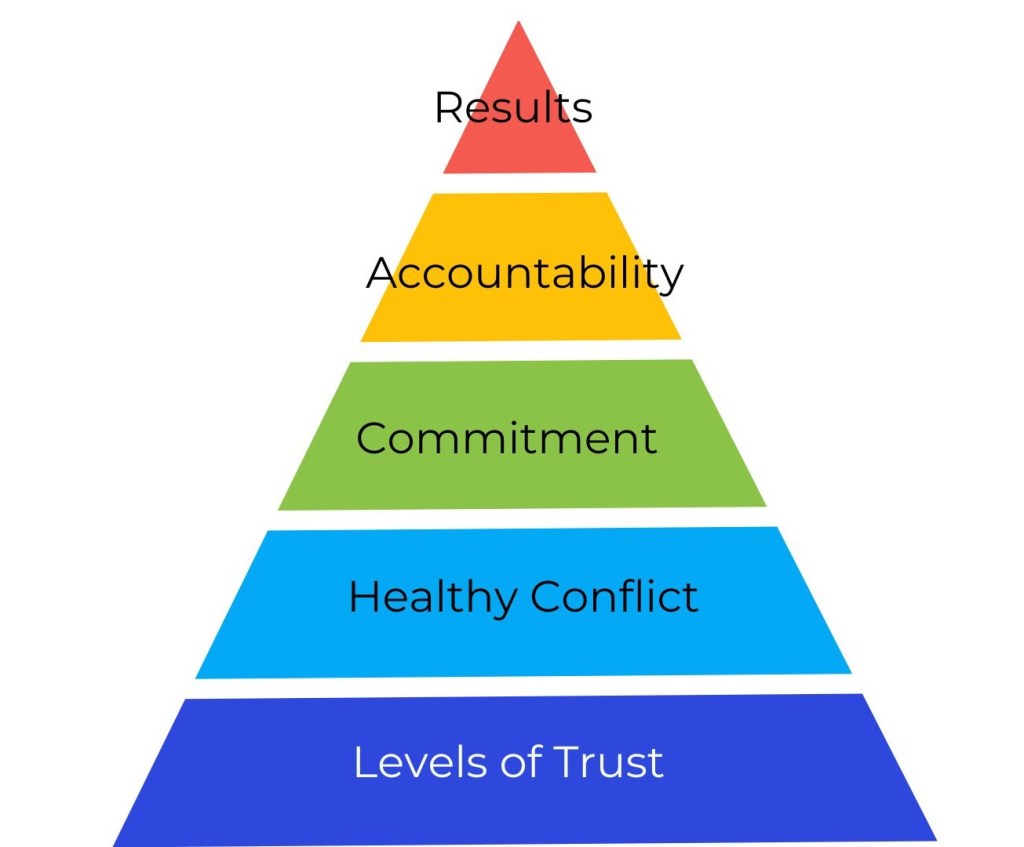
1. Trust: The Foundation of Teamwork
Trust is the cornerstone of any successful team. Lencioni emphasises vulnerability-based trust, where team members feel safe to admit mistakes, ask for help, and share their concerns without fear of judgment. Without trust, teams remain guarded, which stifles collaboration and innovation.
How to Build Trust:
- Encourage open conversations and share personal experiences.
- Foster a culture where admitting mistakes is seen as a learning opportunity.
- Use assessments like DiSC to understand behavioural preferences and improve team cohesion.
2. Conflict: Healthy Debate Fuels Growth
Many teams avoid conflict to maintain harmony, but this often leads to artificial consensus and unresolved tensions. Productive conflict—where team members challenge ideas constructively—leads to better decision-making and innovation.
How to Encourage Healthy Conflict:
- Create an environment where differing opinions are welcomed.
- Set ground rules for respectful debate.
- Facilitate structured discussions to ensure all voices are heard.
3. Commitment: Gaining Buy-In Through Clarity
Once teams engage in healthy debate, they must align behind decisions. Lack of clarity and consensus leads to ambiguity and hesitation. Commitment isn’t about unanimous agreement but ensuring that every team member feels heard and supports the final decision.
How to Strengthen Commitment:
- Clearly define goals and expected outcomes.
- Encourage team members to voice concerns before finalising decisions.
- Use clear action plans to reinforce accountability.
4. Accountability: Holding Each Other to High Standards
Teams often struggle with accountability when members fear causing tension. However, high-performing teams embrace peer-to-peer accountability, where individuals hold each other responsible for performance and behaviour.
How to Foster Accountability:
- Establish clear performance expectations.
- Encourage open and honest feedback.
- Regularly review progress against goals and address gaps constructively.
5. Results: Driving Success Together
The ultimate measure of a great team is its results. When trust, conflict, commitment, and accountability are strong, teams focus on collective success rather than personal gain. Teams that prioritise results outperform those that get distracted by individual achievements or silos.
How to Maintain a Results-Oriented Team:
- Align individual and team goals with organisational objectives.
- Celebrate team successes and learn from failures.
- Regularly track and measure key performance indicators (KPIs).
Bringing It All Together
Team dynamics are complex, but by intentionally cultivating trust, embracing healthy conflict, committing to decisions, holding each other accountable, and focusing on results, teams can achieve exceptional performance.
At Exemplar Pro, we help teams apply The Five Behaviours of a Team framework to unlock their full potential. If you’re ready to transform your team’s performance, get in touch with us today.
 Blog
Blog 
Leave a comment